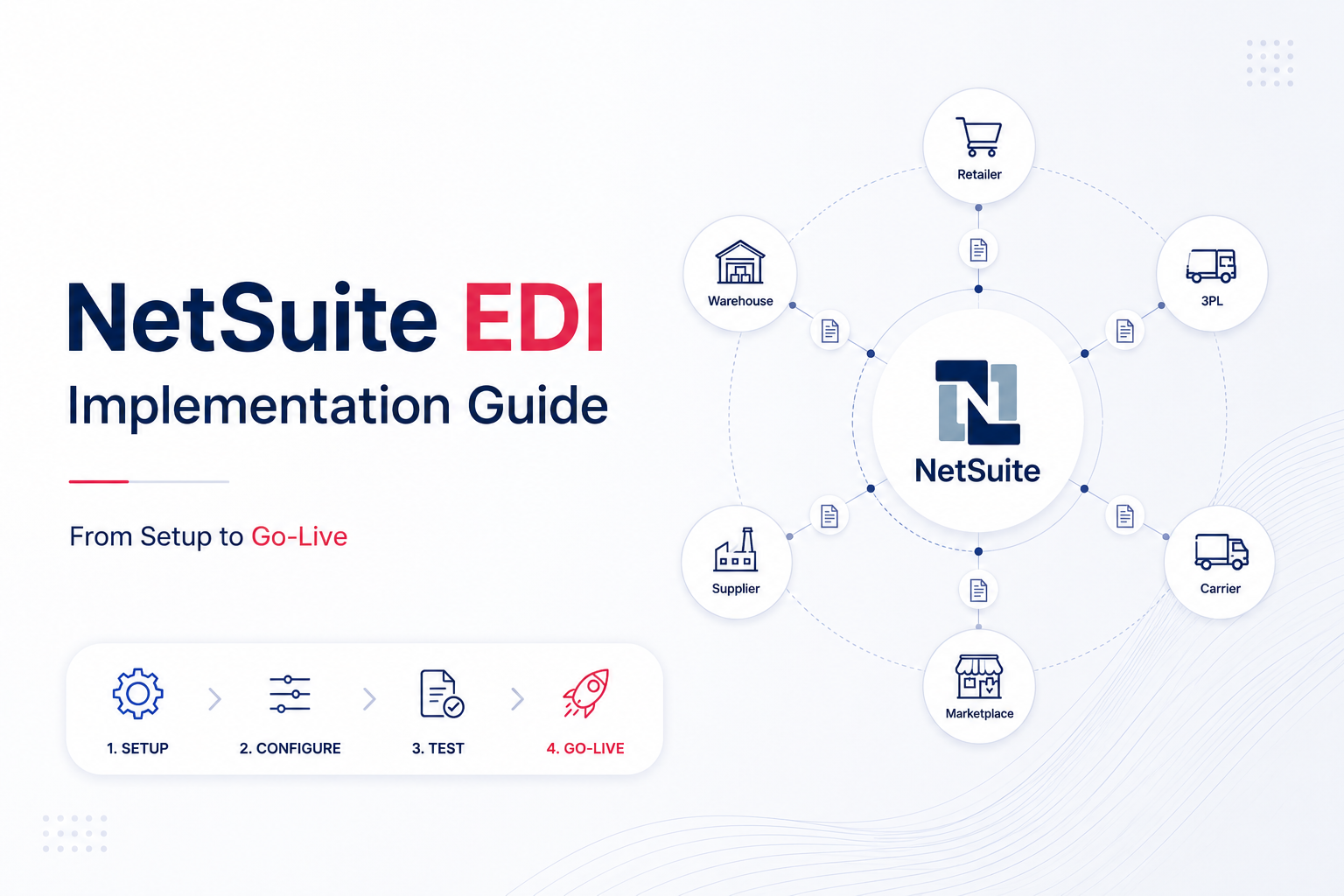
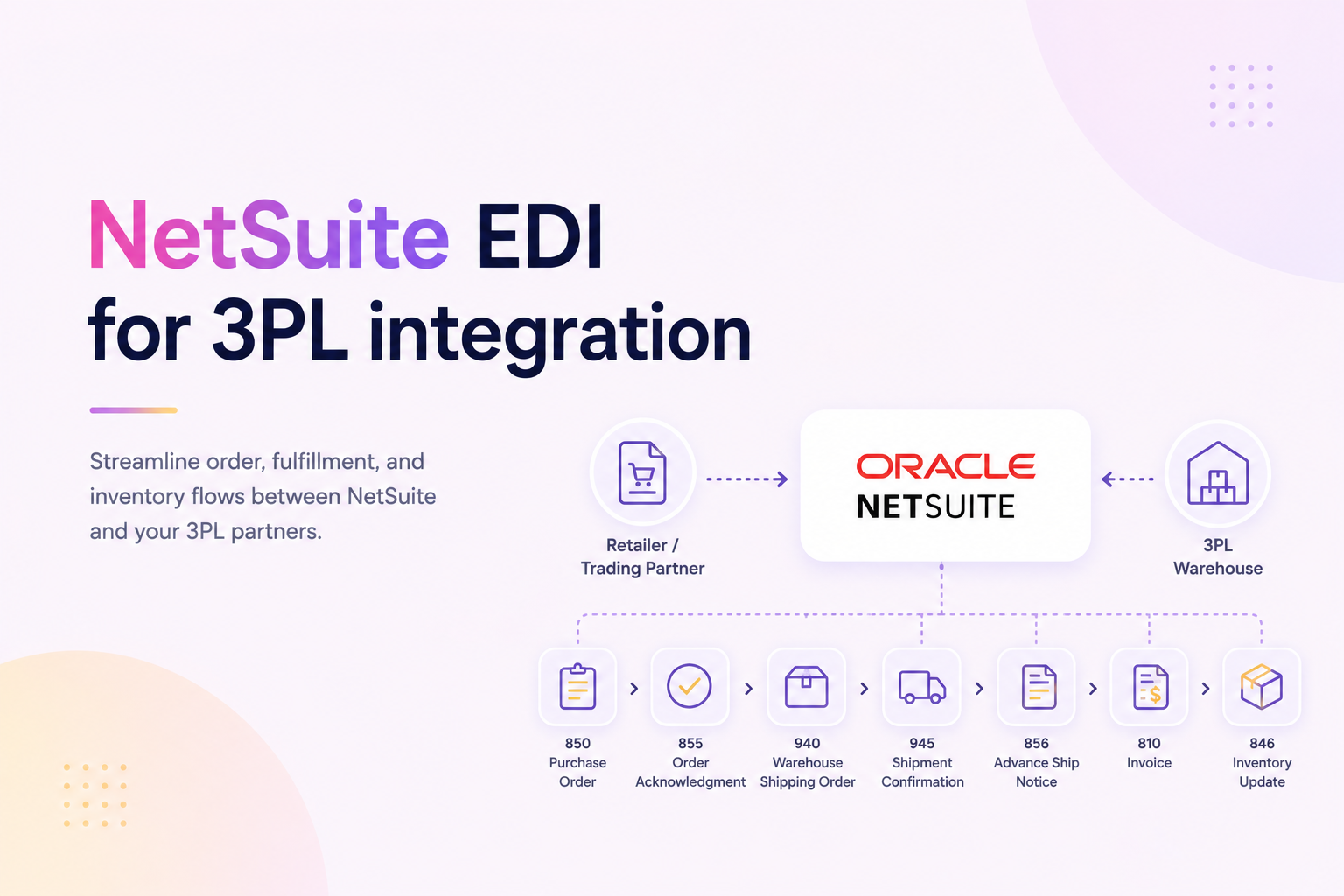
NetSuite EDI integration connects NetSuite ERP with retailers, distributors, marketplaces, suppliers, and 3PLs using Electronic Data Interchange (EDI). It automates the exchange of business documents such as purchase orders, invoices, advance shipping notices (ASNs), and inventory updates, eliminating manual data entry while improving accuracy, compliance, and operational efficiency.
Trading Partners
Retailers, Distributors,
Suppliers, 3PLs
ORACLENetSuite
NetSuite ERP
Orders, Shipments, Invoices,
Inventory & more
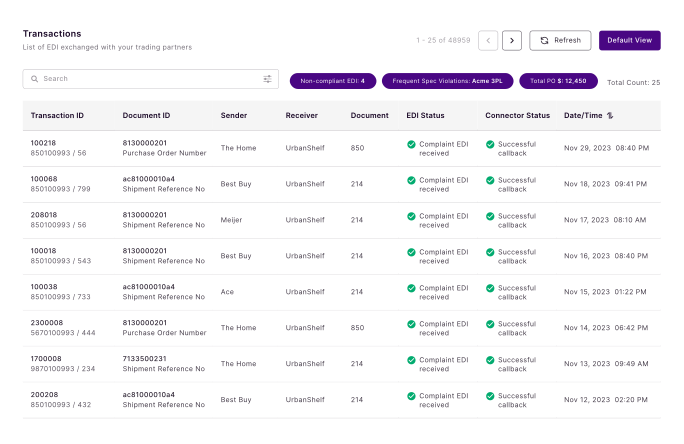
EDI works with NetSuite by automatically translating and exchanging business documents between NetSuite and trading partners. When a retailer sends a purchase order, the EDI platform validates the transaction, maps it to the correct NetSuite records, and synchronizes updates such as shipments, invoices, and inventory changes without manual intervention.
Automated document exchange
- 1Receive PO
- 2Validate & Map
- 3Sync to NetSuite
NetSuite provides the APIs, workflows, and customization capabilities needed to support EDI integrations, but it does not include a complete, retailer-ready EDI solution out of the box. Most companies use an EDI integration platform to connect NetSuite with trading partners, automate document processing, and meet retailer-specific compliance requirements.
NetSuite + EDI platform
- APIs & workflows built in
- EDI platform adds compliance
- Retailer-ready automation
Companies integrate EDI with NetSuite to eliminate manual order processing, improve data accuracy, accelerate order fulfillment, and meet retailer compliance requirements. As trading partner volumes grow, EDI automation helps businesses scale operations efficiently while reducing errors, chargebacks, delays, and the administrative effort associated with managing orders manually.
Scale without manual overhead
- Faster fulfillment
- Fewer chargebacks
- Retailer compliance
NetSuite EDI integration streamlines order-to-cash and procure-to-pay processes by automating document exchange between NetSuite and trading partners. Benefits include faster order processing, reduced manual workload, improved visibility, fewer errors, stronger retailer compliance, lower operational costs, and the ability to support growing transaction volumes without increasing administrative overhead.
Order-to-cash automation
- Reduced manual workload
- End-to-end visibility
- Lower operational costs
Yes. A properly configured NetSuite EDI integration can automate the complete flow of EDI transactions, including purchase orders, acknowledgments, ASNs, invoices, inventory updates, and status notifications. Automation minimizes manual intervention, improves processing speed, reduces errors, and enables businesses to manage large trading partner networks more efficiently.
Fully automated flows
- POs & acknowledgments
- ASNs & invoices
- Inventory & status updates
Implementation timelines vary based on the number of trading partners, document types, and testing requirements. Most NetSuite EDI projects can be completed within a few weeks, while more complex environments involving multiple retailers, warehouses, or custom workflows may require additional configuration and certification before going live.
Typical go-live window
A few weeks
Complex multi-partner setups may need additional certification.
A typical NetSuite EDI implementation includes discovery and requirements gathering, NetSuite integration setup, EDI document mapping, trading partner configuration, testing and certification, user validation, and production go-live. The process ensures transactions flow accurately between NetSuite and trading partners while meeting compliance and operational requirements.
Implementation phases
- 1Discovery
- 2Integration setup
- 3Mapping & config
- 4Testing
- 5Go-live
Common challenges include retailer-specific requirements, document mapping complexities, testing delays, data quality issues, and managing multiple trading partner standards. Choosing an experienced EDI provider and using a proven implementation framework can significantly reduce risk, accelerate onboarding, and help ensure a smoother and more predictable go-live process.
Plan for common hurdles
- Retailer-specific specs
- Mapping & data quality
- Testing & certification
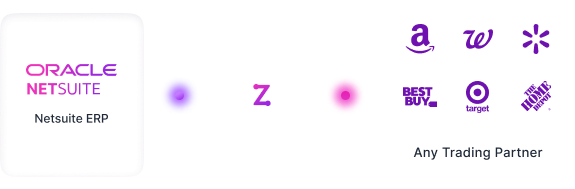
NetSuite EDI integration connects NetSuite ERP with retailers, distributors, marketplaces, suppliers, and 3PLs using Electronic Data Interchange (EDI). It automates the exchange of business documents such as purchase orders, invoices, advance shipping notices (ASNs), and inventory updates, eliminating manual data entry while improving accuracy, compliance, and operational efficiency.
Trading Partners
Retailers, Distributors,
Suppliers, 3PLs
ORACLENetSuite
NetSuite ERP
Orders, Shipments, Invoices,
Inventory & more






.3s-z-biktbgmq.svg)